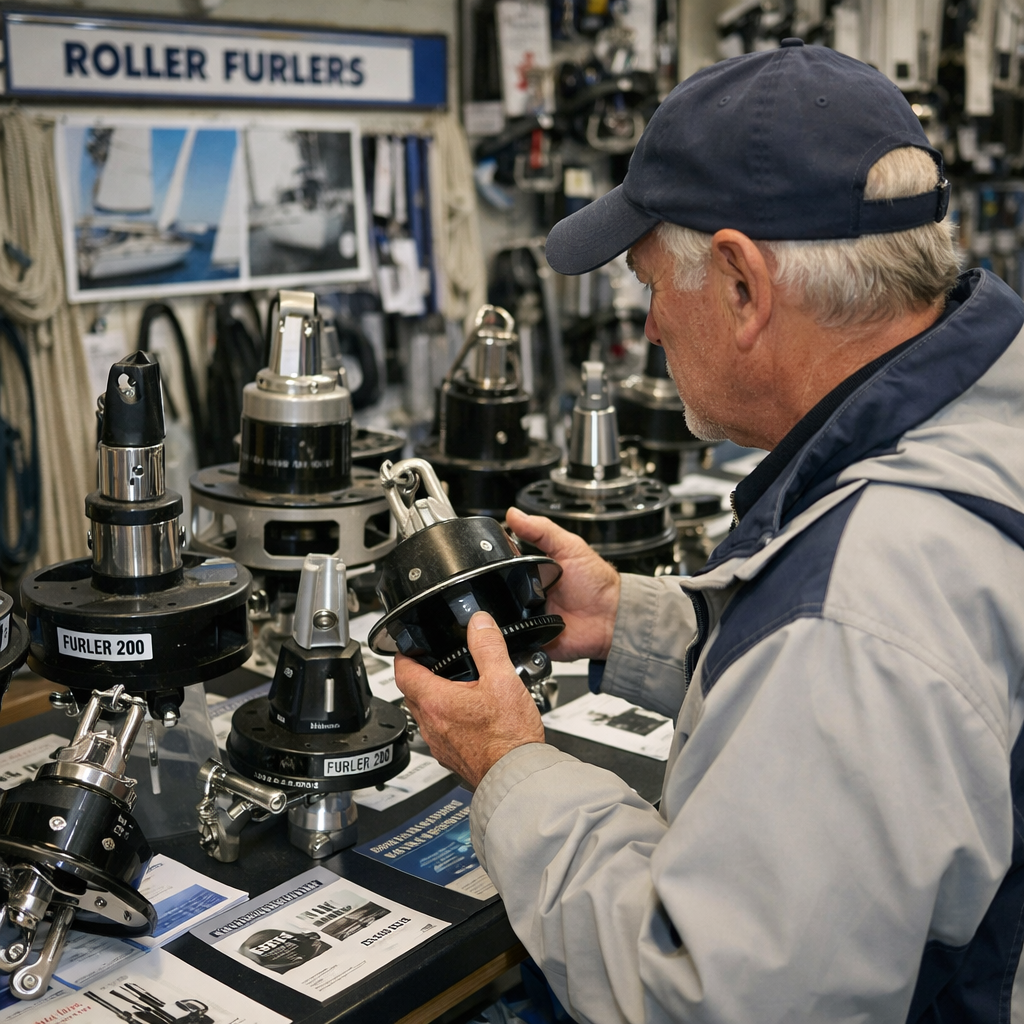
A practical guide comparing conventional furlers, integrated‑halyard systems, extrusion materials, bearing types, sailing environments, installation methods, and why 3DFurler is engineered for both lake and ocean sailors.
Introduction: Why Choosing the Right Roller Furler Matters
Selecting a roller furler is one of the most important rigging decisions a sailor makes. Your furler determines how confidently you can reef, furl, and manage your headsail when conditions shift — whether you’re cruising inland lakes or pushing offshore into heavy weather. The right system improves safety, reduces maintenance, and ensures your sail plan responds instantly when you need it to.
Today’s furlers fall into two major categories: conventional systems with external halyards and swivels, and integrated‑halyard systems that eliminate those components entirely. Add in choices like aluminum vs. polymer extrusions, roller bearings vs. axial bearings, installation method, and sailing environment, and the decision becomes more complex than simply picking a brand.
This guide breaks down each factor clearly — and shows how 3DFurler’s modern design solves the traditional weaknesses found in older systems.
Conventional Roller Furlers vs. Integrated‑Halyard Systems
Conventional Systems
Traditional furlers use:
- A mast halyard
- A top swivel
- A lower drum with bearings
- An aluminum foil mounted over the forestay
These systems work, but they introduce known failure points:
- Swivel seizure under load
- Halyard wrap in high wind
- Bearing corrosion
- Complex maintenance
- Higher installation labor
Conventional systems also require mast‑top work and careful alignment — increasing both cost and complexity.
Integrated‑Halyard Systems
Integrated‑halyard furlers eliminate the mast halyard entirely. Instead, the halyard is built into the extrusion itself, creating a closed system with:
- No swivel
- No external halyard
- No halyard wrap
- No rotating joints
- No bearing‑dependent components
This dramatically reduces mechanical complexity and removes the most common offshore failure points.
Deck‑Level Installation
One of the biggest advantages of integrated systems is deck‑level installation. With 3DFurler, the entire system installs from the deck, meaning:
- No mast climbing
- No forestay removal
- No rigging shop required
- No multi‑hour labor charges
This is a major cost and safety advantage over conventional systems that require stay removal, foil cutting, and mast‑top work.
To see how deck‑level installation works step‑by‑step, visit our detailed installation guide.
Aluminum vs. Polymer Extrusions
Aluminum Extrusions
Aluminum has long been the industry standard. It offers:
- High rigidity
- Good torsional strength
- Familiar installation
But aluminum also brings drawbacks:
- Corrosion in saltwater
- Higher weight aloft
- Denting or deformation
- Requires anodizing or coating
For offshore sailors, aluminum is reliable — but it demands maintenance and adds weight where you least want it.
Polymer Extrusions
Modern engineered polymers have changed the game. High‑strength polymers offer:
- Lower weight
- Zero corrosion
- Impact resistance
- UV stability
- Smooth furling under load
The right polymer formulation can outperform aluminum in real‑world conditions.
3DFurler’s approach:
3DFurler uses a marine‑grade polymer extrusion engineered for:
- High torsional efficiency
- Zero corrosion
- Shock resistance
- Smooth furling even when the sail is loaded
This makes it ideal for both lake sailors who want simplicity and offshore sailors who need reliability in harsh conditions.
Learn more about our polymer extrusion technology and why it outperforms aluminum in real‑world sailing conditions.
Roller Bearings vs. Axial Bearings (and Why Bearing Choice Matters)
Roller Bearings
Most conventional furlers rely on ball or roller bearings. These bearings:
- Reduce friction
- Allow smooth rotation
But they also:
- Corrode
- Seize under load
- Jam when contaminated with salt or sand
- Require lubrication and cleaning
A seized bearing can prevent furling entirely — a dangerous failure offshore.
Axial Bearings
Axial bearings handle vertical loads but still introduce moving parts that can wear or jam.
No‑Bearing Systems
The most reliable furling systems eliminate bearings altogether. With no bearings:
- Nothing can seize
- Nothing can corrode
- Nothing needs lubrication
- Nothing can jam under load
3DFurler’s approach: 3DFurler uses no bearings of any kind. Its torque‑efficient design allows smooth furling without relying on mechanical components that can fail.
Modular Foils: Expandable, Adjustable, and Future‑Proof
Expandable Length
Add sections to accommodate:
- A new sail
- A longer luff
- A future rig upgrade
Reduction Capability
Remove sections to:
- Fit a smaller sail
- Adjust for different headsail configurations
- Move the system to another boat
Easy Replacement
If a section is damaged, you replace one 12-inch piece, not a section 7 feet or longer.
Transport and Storage
12 – inch Modular sections fit in a car trunk, garage shelf, or boat locker — no 7 ‑foot aluminum extrusion to rivet or screw together.
Choosing a Furler Based on Sailing Environment
Lake Sailing
Lake sailors prioritize:
- Ease of use
- Low maintenance
- Quick furling for sudden gusts
- Lightweight gear
A polymer extrusion and integrated halyard system are ideal here — simple, reliable, and corrosion‑proof.
Coastal Cruising
Coastal sailors need:
- Corrosion resistance
- Smooth furling in variable conditions
- A system that can handle chop and gusts
Both aluminum and polymer can work, but polymer offers better long‑term corrosion resistance.
Offshore / Ocean Sailing
Offshore sailors demand:
- Maximum reliability
- Zero mechanical failure points
- Ability to furl under heavy load
- Resistance to salt, UV, and shock
Integrated‑halyard, no‑bearing systems shine here. Offshore sailors cannot afford a jammed furler.
Labor Costs vs. DIY Installation
Traditional furlers often require:
- Forestay removal
- Foil cutting
- Mast‑top work
- Two riggers
- Minimum labor hours
- Travel time
This can easily add $600–$2,000 to the cost of a conventional furler.
3DFurler’s DIY Advantage
3DFurler installs over the stay, from the deck, with:
- No riggers
- No mast climbing
- No stay removal
- No specialized tools
Most sailors install 3DFurler in under two hours, saving hundreds or thousands in labor costs.
Why 3DFurler Is Built for Both Lake and Ocean Sailors
3DFurler was engineered to eliminate the failure points found in traditional furlers. Its advantages include:
- Deck‑level installation — safer and dramatically cheaper
- Modular foil system — expandable, adjustable, and future‑proof
- No bearings — nothing to seize
- No swivels — nothing to corrode
- No halyard wrap — integrated halyard system
- Polymer extrusion — lightweight, corrosion‑proof, impact‑resistant
- Torque‑efficient design — smooth furling under load
- DIY‑friendly — installs in under two hours
Whether you sail inland lakes or cross oceans, 3DFurler gives you a system that simply works — every time, in every condition.
Q&A Section
Q1: What’s the difference between a conventional furler and an integrated‑halyard furler?
Conventional furlers use a mast halyard, swivel, and bearings. Integrated‑halyard systems eliminate those components, reducing failure points and preventing halyard wrap.
Q2: Is polymer better than aluminum for furling extrusions?
Polymer is UV, corrosion‑proof, and impact‑resistant. Aluminum is rigid but heavier and prone to corrosion, bending and kinking. The best choice depends on your sailing environment.
Q3: Why do bearings fail in roller furlers?
Bearings in conventional roller furlers fail because they are exposed to corrosion, contamination, and high rotational loads — but the biggest issue is sideload stress. When a headsail is under load, the drum and swivel experience significant lateral force, pushing the bearings sideways instead of allowing them to rotate freely. Ball and roller bearings are not designed for this sideload condition, so they deform, seize, or grind under pressure. Add salt, sand, or dirt, and the failure accelerates. Eliminating bearings removes these sideload and contamination failure points entirely.
Q4: Can a no‑bearing furler handle offshore loads?
Yes. 3DFurler’s no‑bearing furler can handle offshore loads because it relies on torque efficiency rather than mechanical components that can seize or deform. In systems like 3DFurler, the forestay itself acts as the centralizer, keeping the rotating components perfectly aligned even when the sail is under heavy load. This eliminates the sideload and compression issues that destroy conventional bearings. With the stay providing structural centering and the drum delivering pure rotational torque, a no‑bearing system can furl smoothly and reliably in both coastal and bluewater conditions.
Q5: What makes 3DFurler suitable for both lakes and oceans?
Its polymer extrusion, integrated halyard, modular foil system, and no‑bearing design make it corrosion‑proof, jam‑proof, and reliable in all conditions.
Conclusion
Choosing the right roller furler means understanding the tradeoffs between conventional and integrated systems, extrusion materials, bearing types, installation methods, and your sailing environment. For sailors who want maximum reliability with minimal maintenance — whether on a lake or crossing oceans — 3DFurler offers a modern, engineered solution that eliminates the weak points found in traditional designs.